For thousands of years, millets fed India. Ragi in Karnataka, bajra in Rajasthan, jowar in Maharashtra, foxtail millet across the Deccan. Then, somewhere between the Green Revolution and packaged breakfast cereal, we largely forgot about them.
They're back — and for good reason. Millets are more nutritious than wheat or rice, naturally gluten-free, low glycaemic, and far better suited to Indian climate and digestion than imported superfoods. Here are the best millet breakfast recipes you can actually make on a busy morning.
Why Millets Are Perfect for Breakfast
- Low glycaemic index — millets release energy slowly, preventing the blood sugar spikes that cause mid-morning energy crashes.
- High in fibre — supports gut health, reduces cholesterol, and keeps you full longer than refined grains.
- Rich in minerals — calcium (ragi has more calcium than milk, gram for gram), iron, magnesium, and zinc.
- Naturally gluten-free — suitable for people with gluten sensitivity or wheat intolerance.
- Climate-resilient crops — grown with minimal water and no pesticides in most cases.
Ragi (Finger Millet) — The Calcium King
Ragi Porridge (Ragi Mudde Style)
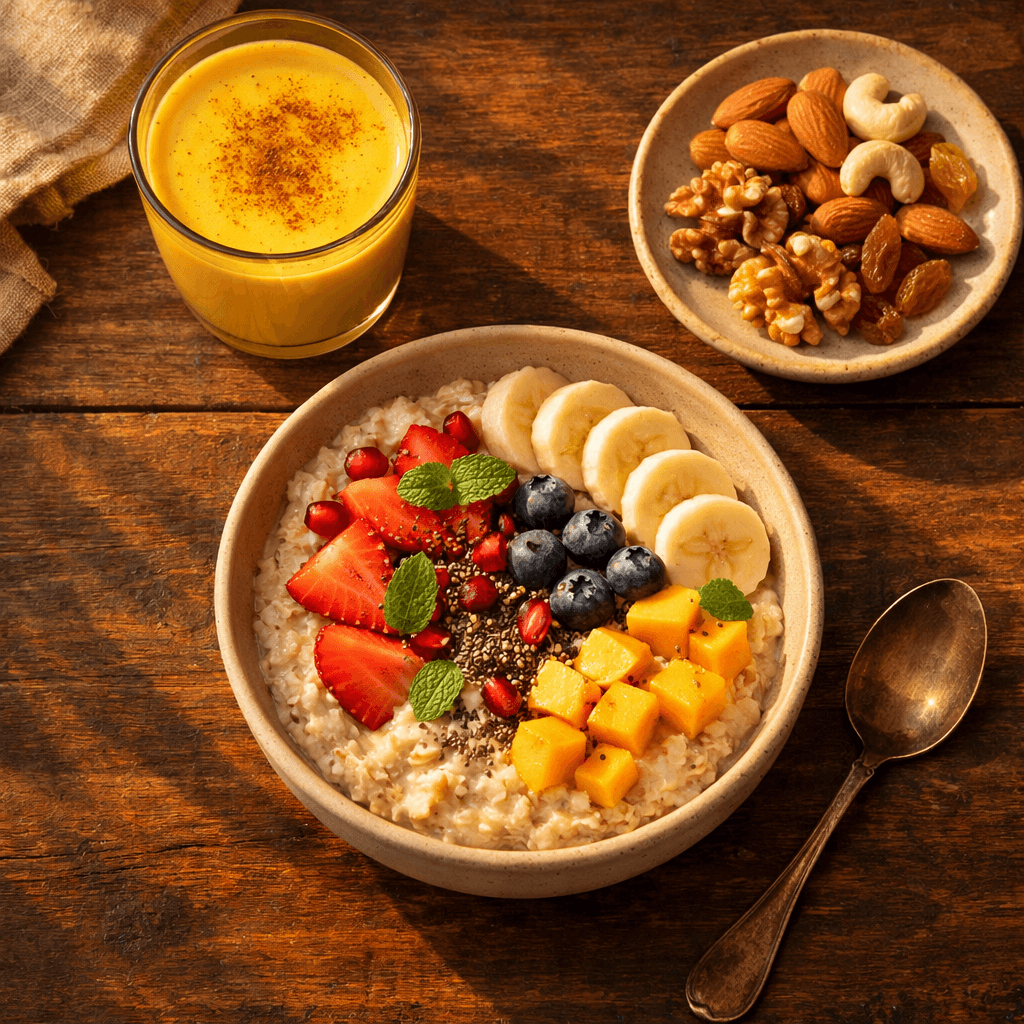
Mix 3 tablespoons ragi flour with 1 cup water, cook on low heat stirring continuously for 5 minutes. Add low-fat milk, a pinch of cardamom, 1 teaspoon ghee, and a few dates for natural sweetness. Top with crushed walnuts. Ready in 8 minutes. ~350 calories, 8g protein, 5g fibre.
Ragi Dosa
Mix ragi flour with rice flour (3:1 ratio), buttermilk, chopped onion, green chilli, and curry leaves. Make thin dosas on a non-stick pan. No fermentation needed. Pair with coconut chutney and sambar for a complete breakfast. ~280 calories, 10g protein.
Bajra (Pearl Millet) — The Heart Protector
Bajra Khichdi Breakfast Bowl
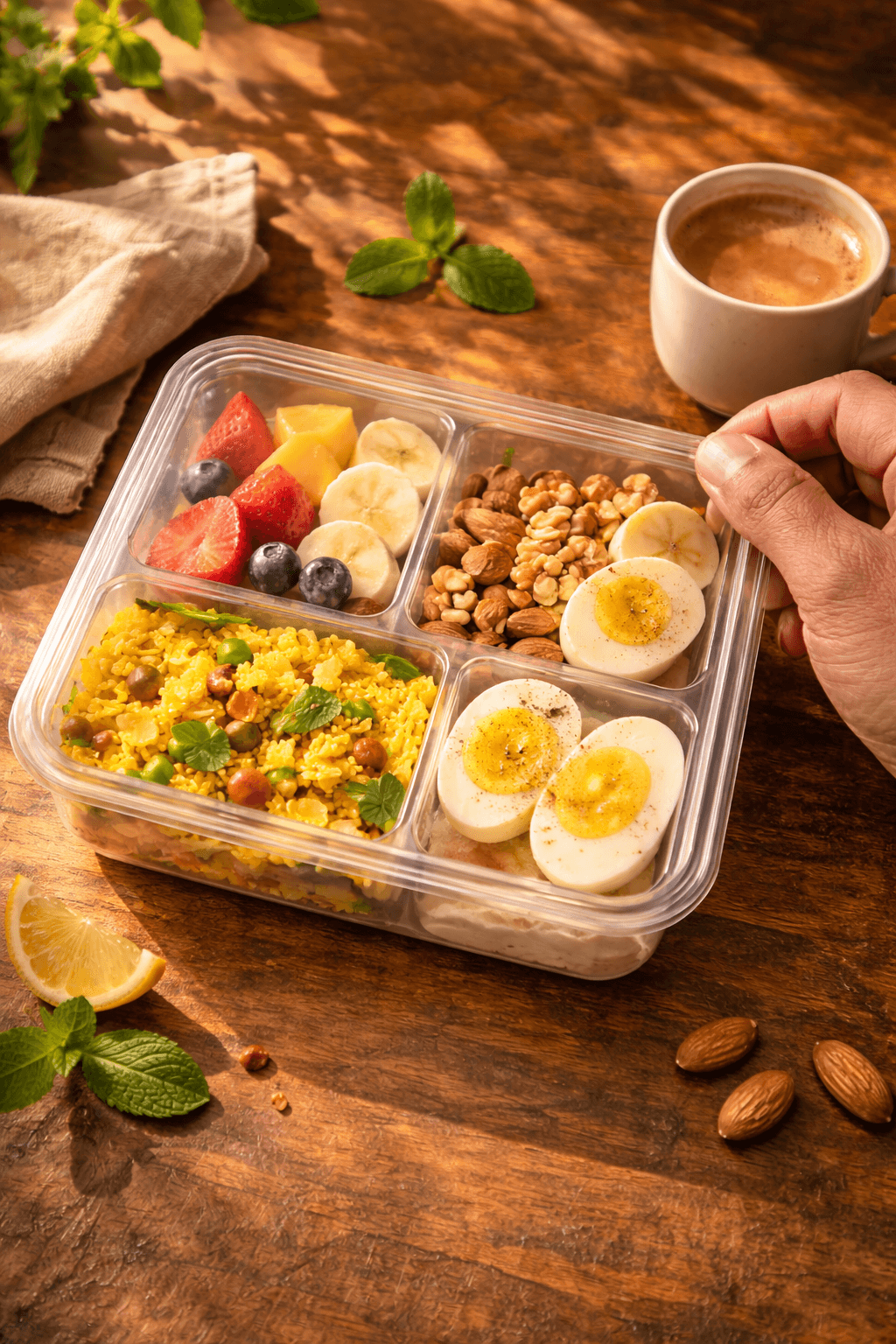
Soak bajra overnight. Pressure cook with moong dal (1:1 ratio), turmeric, and ghee. Top with a fried egg, fresh coriander, and a squeeze of lemon. This is a high-protein, deeply nourishing breakfast that takes 5 minutes if you prep the bajra the night before. ~420 calories, 20g protein.
Jowar (Sorghum) — The Gut Health Grain
Jowar Upma
Dry roast jowar rava (broken jowar). Temper with mustard seeds, curry leaves, green chilli, and ginger. Add mixed vegetables, water, and cook until absorbed. Same technique as semolina upma but with significantly better nutritional value — more fibre, lower GI, and no gluten. ~310 calories, 9g protein.
Foxtail Millet (Kangni/Thinai) — The Weight Manager
Foxtail Millet Pongal
South India's classic pongal made with foxtail millet instead of white rice. Cook foxtail millet with moong dal and temper with ghee, black pepper, cumin, ginger, and cashews. The millet version has a lower glycaemic load and higher protein than the rice version, making it ideal for weight management. ~380 calories, 14g protein.
How to Start if You've Never Cooked Millets
- Start with ragi — it's the most forgiving and widely available (all supermarkets)
- Use it as a 1:1 substitute for atta in dosas, cheelas, or rotis first
- Graduate to jowar upma once you're comfortable
- Bajra and foxtail millet require soaking — build the overnight habit
The Millet Breakfast Trend is Not a Fad
India declared 2023 the International Year of Millets. But this isn't a trend — it's a return. These grains sustained generations of Indians before processed food took over. They are nutritionally superior to refined wheat and rice for almost every health marker: blood sugar, gut health, heart health, bone density.
The only barrier to eating them is familiarity. Once you know two or three recipes, millets become the easiest, most nutritious breakfast choice you can make.
Too busy to prep millets every morning? We do it.
Ragi, jowar, and foxtail millet feature in our rotating 28-day menu — fresh, prepped, and delivered before 8 AM. No soaking, no grinding.
See What We Deliver →