PCOS (Polycystic Ovary Syndrome) affects an estimated 1 in 5 Indian women — making it one of the most common hormonal conditions in the country. Yet most nutritional advice for PCOS is generic, Western, and completely disconnected from how Indian women actually eat.
Breakfast is the most powerful dietary lever for managing PCOS. Here's why — and exactly what to eat every morning in the Indian context.
Why Breakfast Matters Especially for PCOS
The core metabolic issue in PCOS is insulin resistance — the body's cells don't respond properly to insulin, causing the pancreas to produce more, which drives up androgens (male hormones) and disrupts ovulation.
Breakfast directly impacts insulin levels for the rest of the day. A high-sugar or high-refined-carb breakfast (white bread, packaged cereal, fruit juice) causes a sharp insulin spike that worsens insulin resistance over time. A protein-rich, fibre-dense, low-glycaemic breakfast does the opposite — it stabilises blood sugar, reduces insulin demand, and lowers androgen production.
Studies show that women with PCOS who eat a larger, protein-rich breakfast and smaller dinner have significantly lower testosterone and better insulin sensitivity within 3 months — without medication changes.
The PCOS Breakfast Formula
- High protein (30–40g) — the highest single lever for PCOS. Reduces appetite hormones, stabilises blood sugar, and supports weight management which is closely linked to PCOS severity.
- Low glycaemic carbs — ragi, oats, barley, whole pulses. Avoid white rice, white bread, refined atta (maida), and instant oats which behave like sugar.
- Anti-inflammatory fats — ghee, flaxseeds, walnuts, chia seeds. Chronic inflammation worsens PCOS. These fats actively counter it.
- Zinc and magnesium-rich foods — pumpkin seeds, sesame, legumes. These minerals are commonly deficient in PCOS and play a direct role in hormone regulation.
- No sugar, no fruit juice — even "natural" fruit juices spike insulin. Eat whole fruit only, and limit to 1 serving at breakfast.
Best Indian Breakfasts for PCOS
Ragi Porridge with Nuts and Seeds
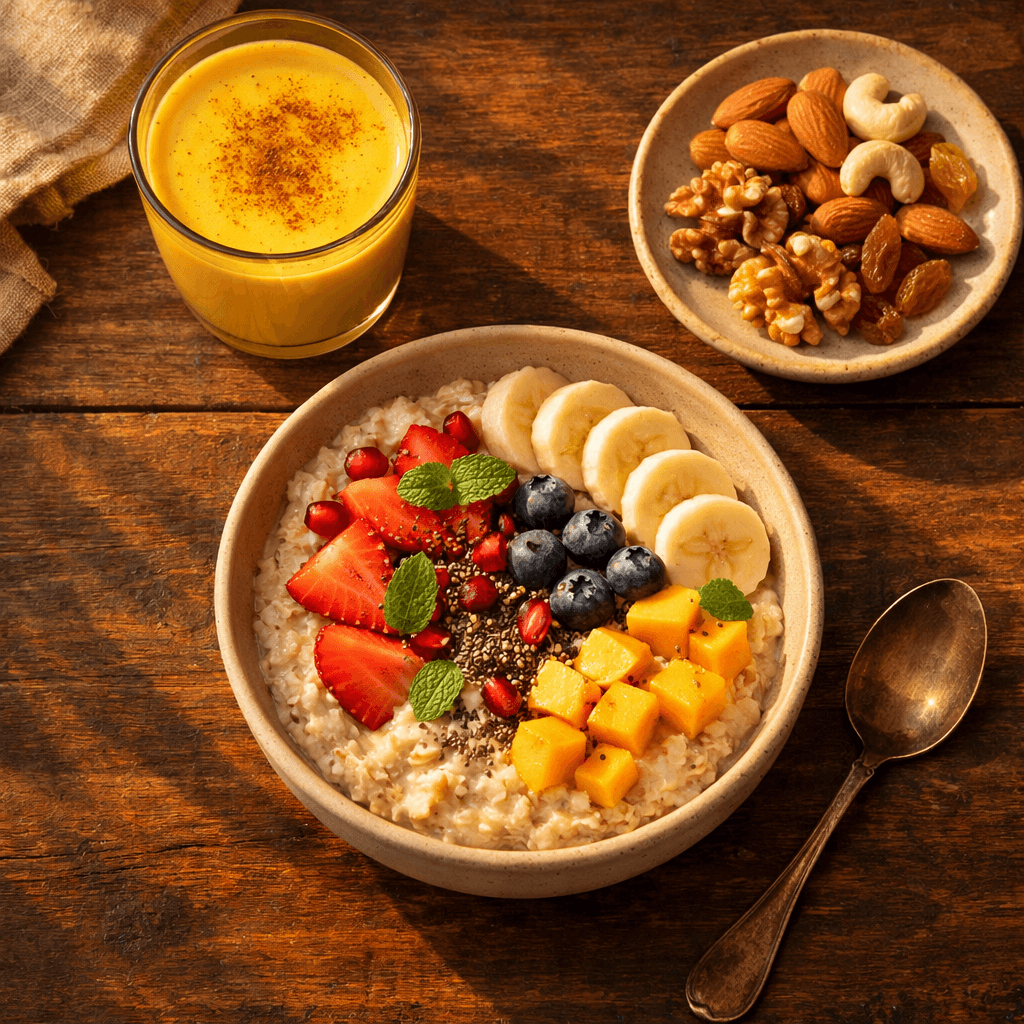
Ragi (finger millet) has a low glycaemic index and is rich in calcium, iron, and fibre. A ragi porridge made with low-fat milk or plant milk, topped with walnuts, pumpkin seeds, and a pinch of cinnamon is one of the best PCOS breakfasts available. Cinnamon specifically has been shown to improve insulin sensitivity.
Moong Dal Chilla with Paneer Filling
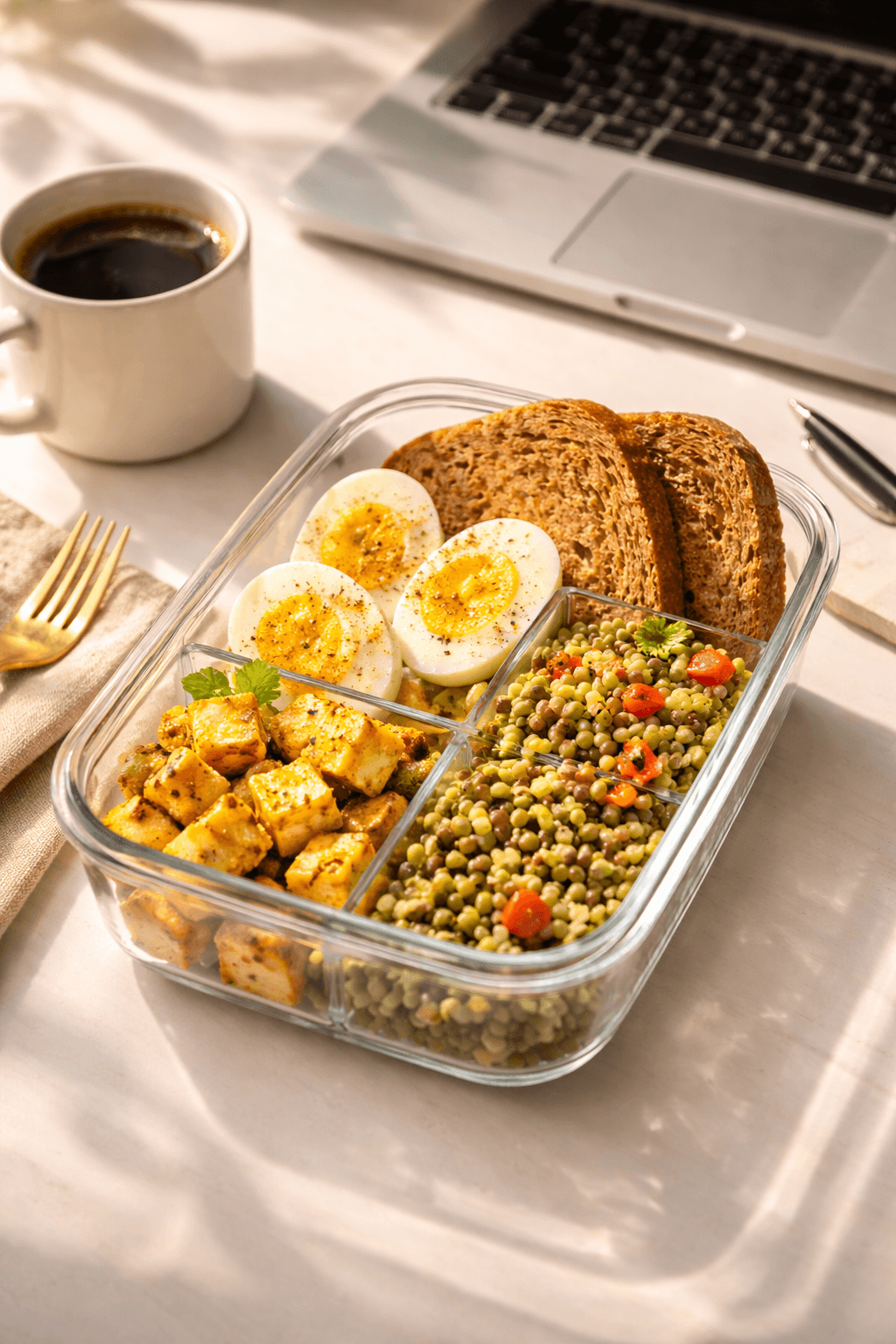
High plant protein from moong dal + additional protein from paneer = approximately 22–28g protein per serving. Low glycaemic, filling, and quick to make if you soak the dal overnight.
Sprouted Salad with Boiled Eggs
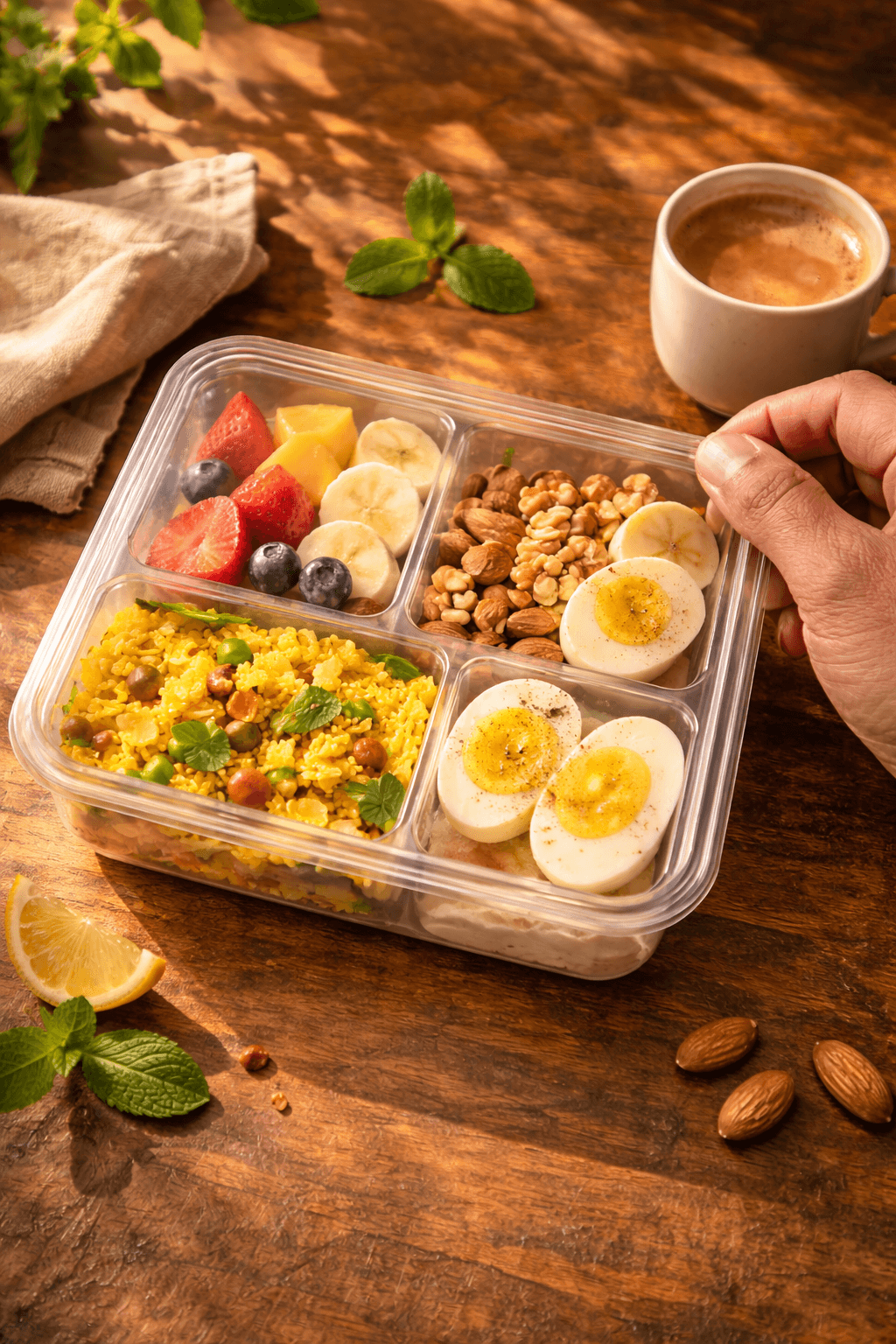
Mixed sprouts (moong, matki, chana) topped with flaxseed powder, lemon juice, and 2 boiled eggs. Around 25g protein, high in zinc, magnesium, and fibre. This is a powerhouse PCOS breakfast.
Greek Yoghurt / Hung Curd with Berries and Flaxseeds
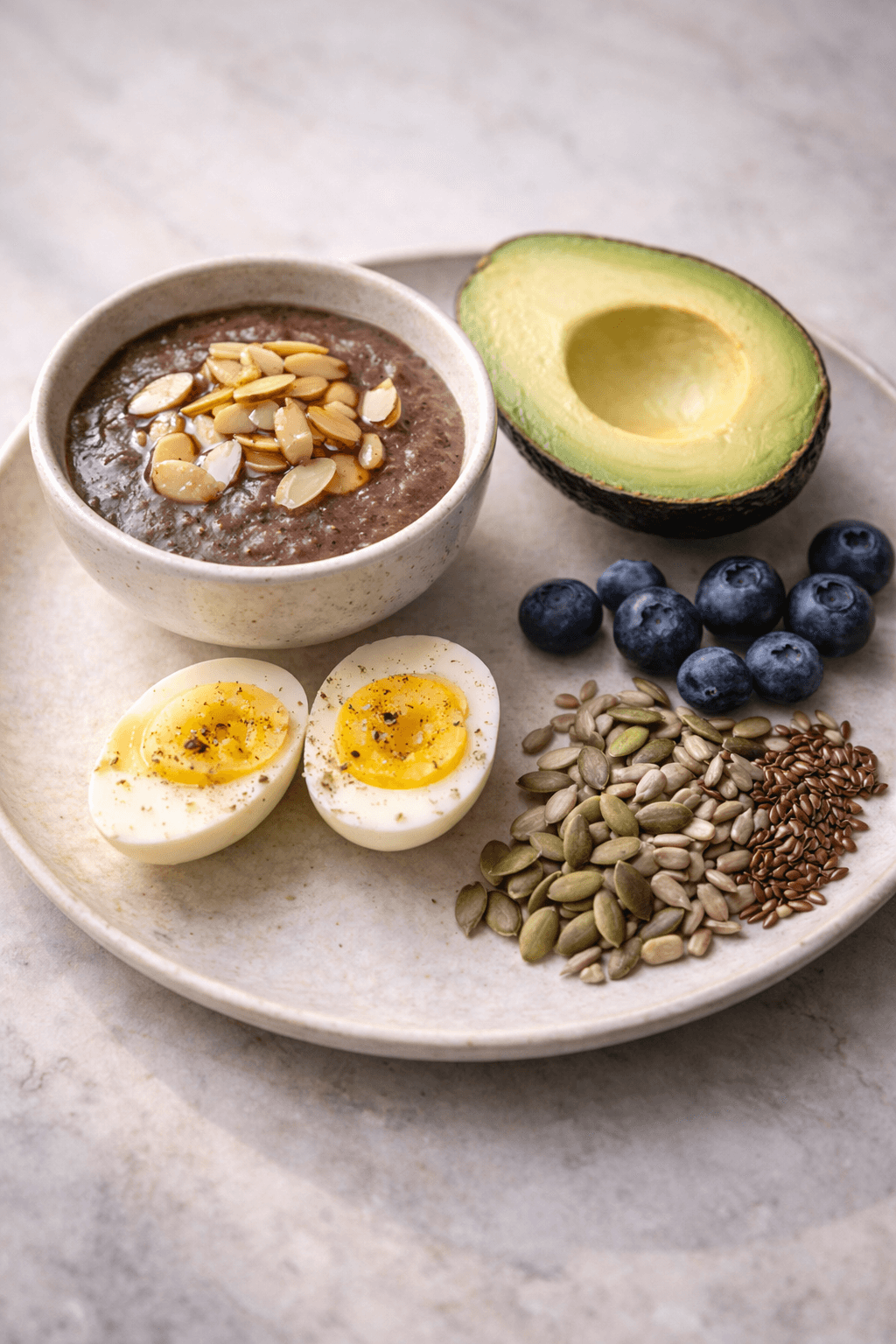
Thick hung curd has 15–18g protein per bowl. Add a tablespoon of ground flaxseeds (which contain lignans that help block excess androgens), fresh berries, and a few walnuts. Simple, no cooking, and genuinely therapeutic for PCOS.
Supplements Worth Considering (with Doctor Approval)
- Inositol (Myo + D-chiro) — the most researched supplement for insulin resistance in PCOS
- Vitamin D — deficient in the majority of Indian women with PCOS
- Magnesium glycinate — supports insulin sensitivity and reduces cortisol
- Omega-3 (fish oil) — reduces inflammation and androgen levels
Note: always discuss supplements with your gynaecologist or endocrinologist before starting.
The Consistency Principle
PCOS is a chronic condition managed over months and years, not days. The most effective approach is a breakfast you can actually eat every day — not a perfect one you eat twice a week. If daily food prep is the barrier, a structured breakfast subscription ensures you start every morning with the nutritional profile your body needs.
PCOS-friendly breakfast, every single morning.
Low GI, high protein, anti-inflammatory ingredients — designed for hormonal balance and delivered before 8 AM in Bangalore.
See PCOS Breakfast Plans →